
Archaeozoology and Isotopy
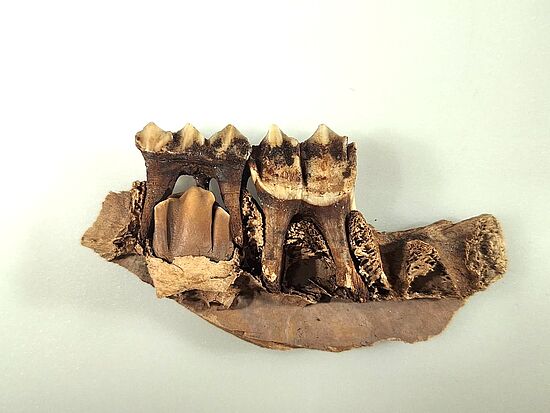
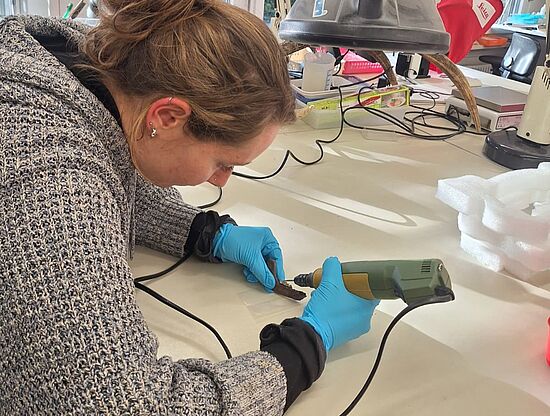
The archaeozoological analysis of the large animal bones from the site «Küsnacht-Immensee Dorfplatz» examines the complex interactions between humans and animals during the Late Neolithic. In addition to the range of animal species utilised, we are also looking for patterns in the distribution of skeletal parts, age at death, as well as pathological and taphonomic features. By comparing this site with the site Zürich-Parkhaus Opèra and other Late Neolithic settlements, we identify distinctive features, similarities and differences in hunting behaviour and livestock husbandry across these settlements. Building on this, multi-isotope analyses of animal teeth and bones are used to investigate questions regarding the animals’ habitat, origin and mobility and, by extension, the population of the time.
This provides, among other things, evidence regarding the temporal and spatial scale of human and animal mobility, whether the sites were permanent settlements or temporarily occupied hunting camps, and how contacts between regions and human groups can be reconstructed.
Social Media