
In order to answer our research questions, we need appropriate sites fulfilling several criteria. Among these criteria are certainly the following:
- 1. Large excavated area to yield a representative dataset for the settlement in question
- 2. Comparable excavation methods
- 3. Sufficient degree of organic preservation
- 4. Systematic sampling
- 5. Indications for differences in economy and or function
Luckily, we have such sites in our research area, and we will present them below.
Follow us on:
- ResearchGate/Academia
- Mendeley or LinkedIn
- Bluesky, Reddit or Youtube
Excavated in 2010 as a rescue campaign, the site features 3000 excavated square meters with the remains of eight settlement phases. Two of the cultural depositions (layers 13 &14) were organically preserved. All layers and phases are dendrodated and the pile field analysis produced ground plans and village plans to various degrees of completeness. The most important layer (13) dates to 3176-3160 BC and features 26 buildings, many of which were preserved along with their individual middens. A very large amount of sediment samples was recovered, many of which are still being stored and available for research.
The site was analysed in detail involving a wide range of disciplines. A special emphasis was set on the clarification of the taphonomy and the genesis of the layers. Further studied aspects were the economy and ecology from an interdisciplinary perspective. The site has e.g. produced the largest archaeobotanical dataset from a lakeside settlement ever analysed. Many publications, both in German Monographs and English peer reviewed articles give detailed insights into the studies and the interdisciplinary results (see a selection below).
At first sight, the economic data seemed to give no surprising results, fitting in the general picture of a largely autarchic late Neolithic agricultural economy. However, among the most important results ranges the large set of indications that the surroundings of the settlements were systematically changed in an example of massive niche construction or landscape engineering. People not only cleared woodland for fields. They also created different types of groves. One to produce leave hay fodder and timber and another for fruit-bearing trees that were at least tended, if not planted. And they started with this endeavour at least 15 years before the local settling started. The surroundings provide different soils, among which there is so called Parabraunerde, which is well suited for agriculture.
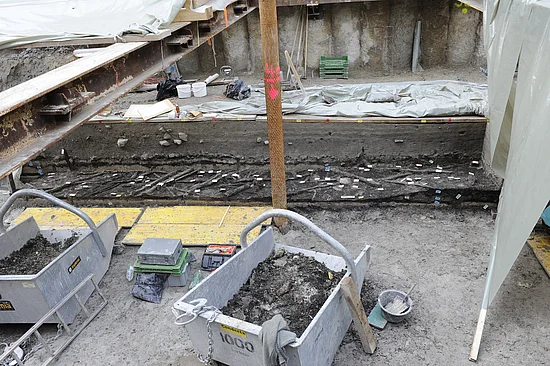
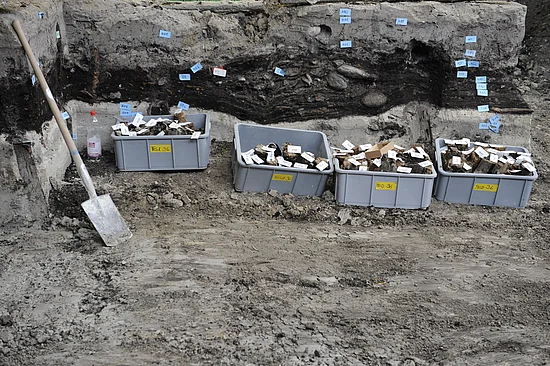
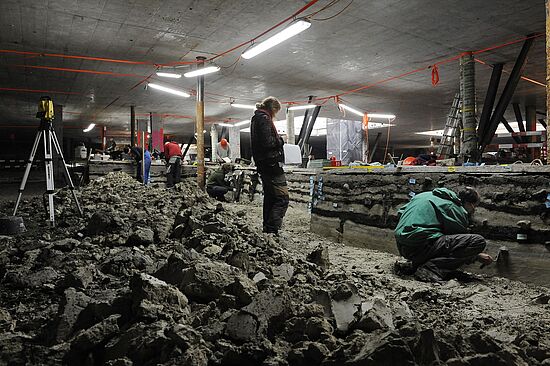

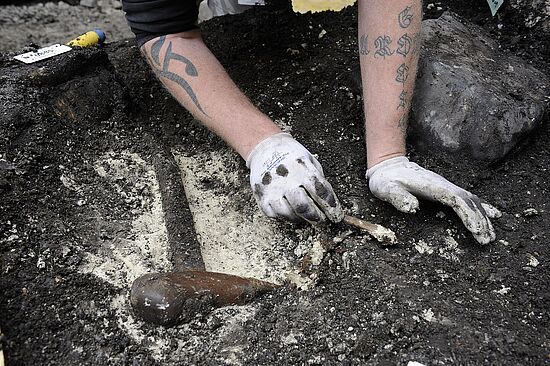
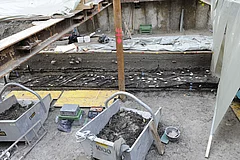
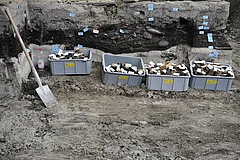
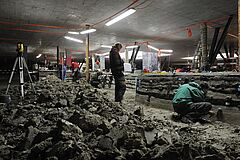
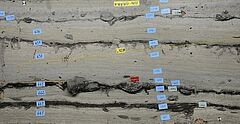
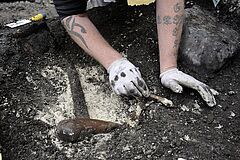
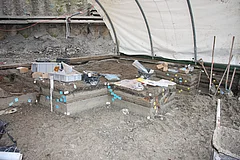
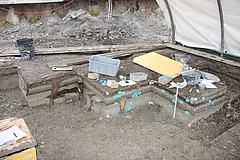
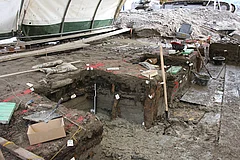
Excavated in 2020 also during construction works, this site is somewhat smaller with only roughly 300 square meters. It contained the remains of four settlement phases, three late Neolithic and one end-Neolithic. The last will be ignored, as it was documented only on a handful of square meters.
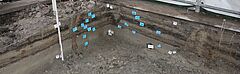
The three late Neolithic deposits were organically preserved and systematically sampled. Due to the selection of timber, dendro dating failed, but the typological dating places the three settlements roughly contemporaneous to Zurich-Parkhaus Opéra. Without dendro results, the pile field analysis did not produce detailed ground plans. However, the lessons learned from Parkhaus Opéra still enabled us to identify roughly the positions of buildings and their middens. Before DeciLak, only a small number of sediment samples had been looked at by archaeobotany and microzoology, giving first indications of the quality of the preservation.
The most striking feature of the site are the numerous remains of refuse from the production of semi-finished stone axe blades from serpentinite. In fact, the site is located on an ancient trade rout along the water ways and ultimately across the alps. Immensee-Dorfplatz is sitting directly on the shortest junction between the waterways of Lake Zug and Lake Lucerne and from the southern shore of Lake Lucerne, there begins the best route to the quarries of the serpentinite. As it turns out, Immensee-Dorfplatz was specialised in producing the semi-finished objects, while other sites further down the waterways are characterized by the tools to turn the semi-finished serpentinite-blocks into finished axe blades. In Zurich-Parkhaus Opéra, in contrary, the necessary tools are rare, while the finished objects were found in great numbers. As it seems, Immensee-Dorfplatz was a node in a network for the production and distribution of these serpentinite axes.
Another intriguing fact about Immensee-Dorfplatz is that the surrounding soils are very poor and one has to walk over a kilometre and 80 m of terrain difference to find soils suited for agriculture. The surrounding lake, however, was so rich in seasonally migrating fish that were in historical times caught in November, that the great Swiss Monasteries kept arguing for centuries about the fishing rights there. Site catchment analyses are a standard tool in archaeology, and one might assume that such an economic potential was realised by Neolithic settlers. Our assumption was therefore, that we should find many fish remains. This was indeed the case, but not of the species in question. However, this might be a taphonomic problem. At any rate, it remains for the moment a mystery.

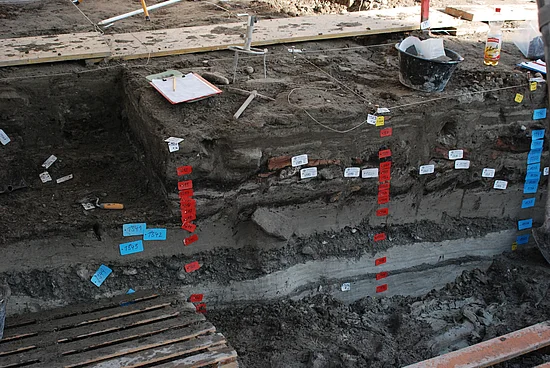
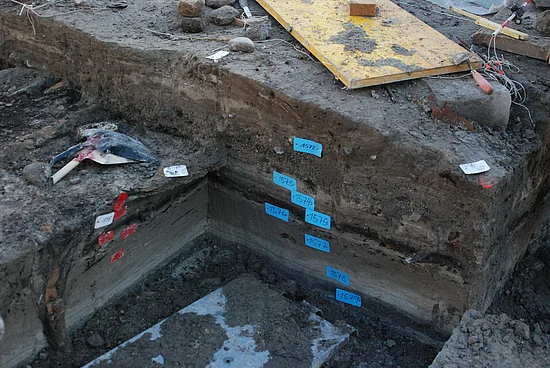
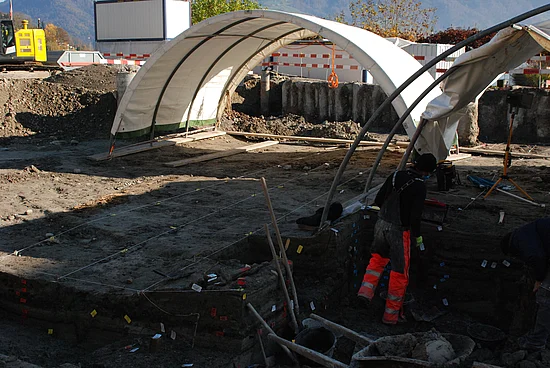
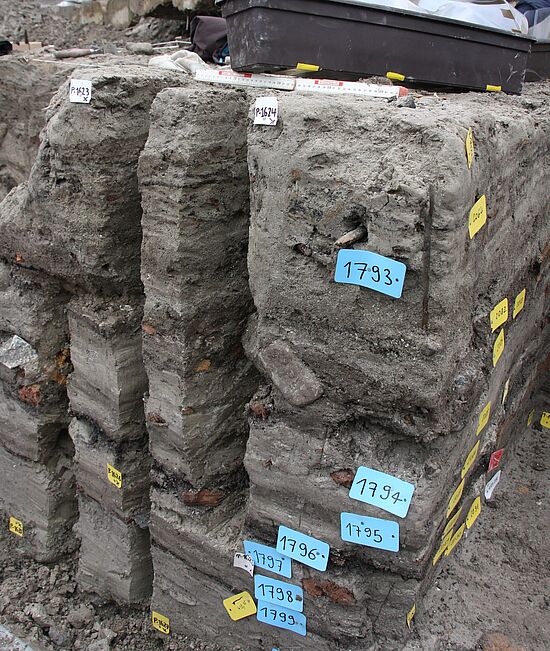
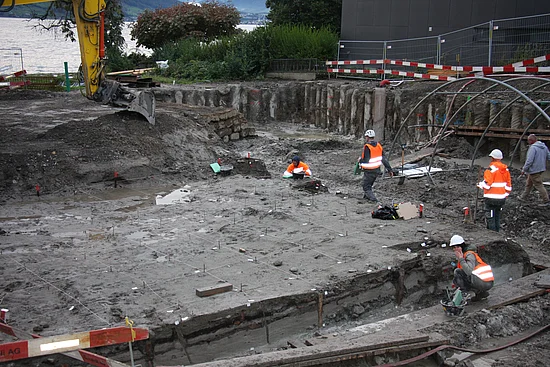
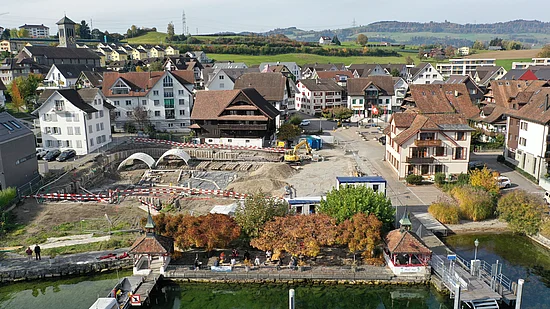
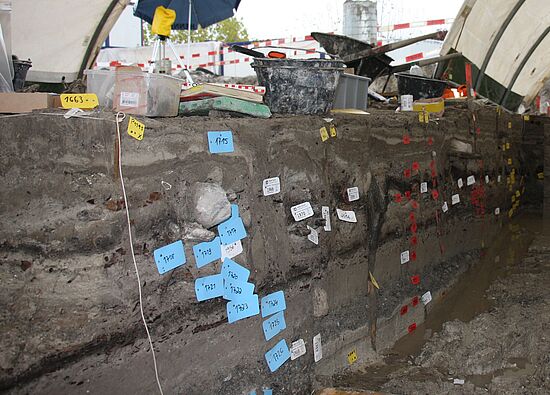
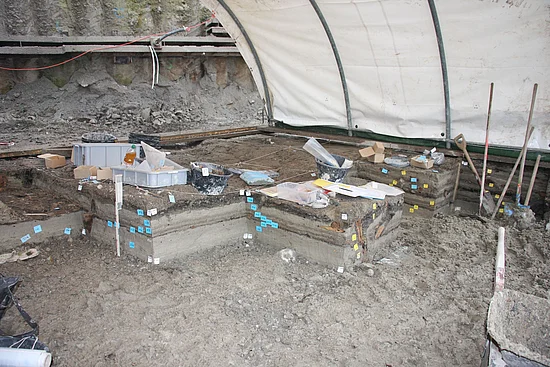
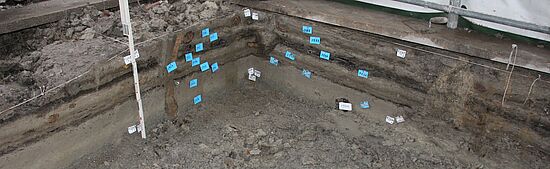
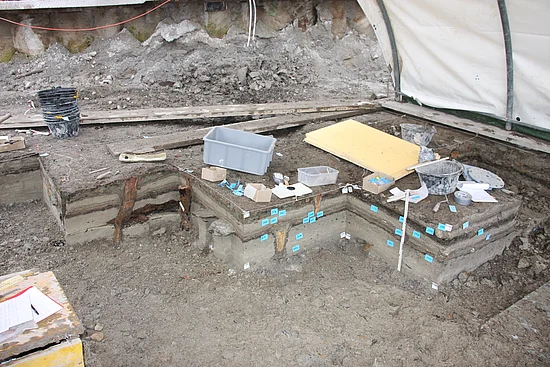
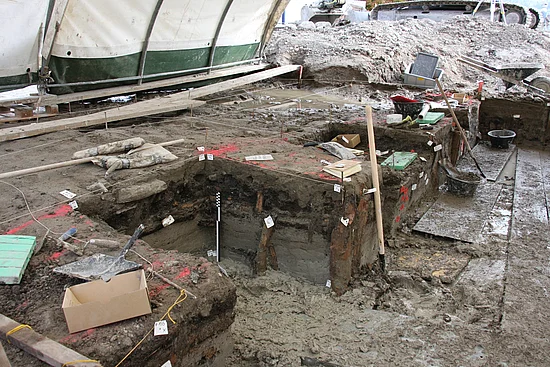
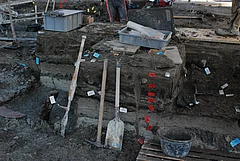
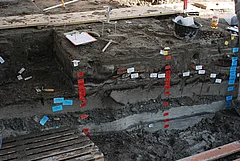
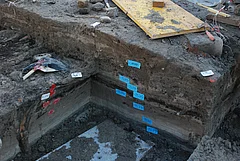
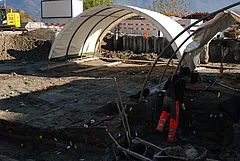
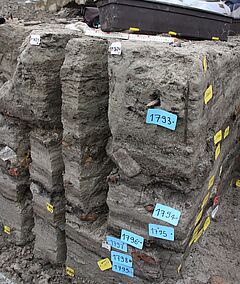
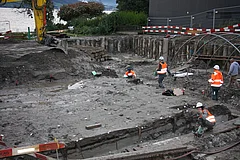
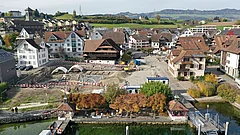
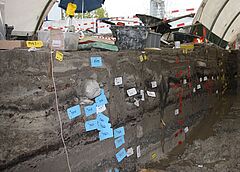
The two sites as a research set-up
Zurich-Parkhaus Opéra largely fits the general assumption of an autarchic agricultural economy, which is also mirrored in the pollen and in the timber use. It has already been studied by the established disciplines of bioarchaeology. Still, it has widened our idea of human-environment interactions, giving evidence of large-scale landscape engineering. It also provides a detailed analysis of social space.
Immensee-Dorfplatz, on the other hand, appears ill-placed for an agricultural community, but perfectly placed as a station in the stone-distribution network. The bioarchaeological data are still scarce – a gap in our knowledge we are about to close. The data on timber use speak for a completely different mode of timber harvesting and we have no indication for leave hay production.
Both sites have comparable degrees of organic preservation, and both sites have not been studied yet using sediment-genetic methods.
With the analyses in DeciLak, we will be able to compare the human impact on the environments of the two settlements and answer a great range of questions concerning the Neolithic economy, settlement system and the development of the cultural landscape.
The two sites are also a perfect testing-ground for the methodological basic research on sediment-genetics in lakeside settlements, as any kind of hypothesis gained on one site can directly be tested on the other with absolute age and degree of preservation staying largely equal.
Social Media